
For home cooks and baking enthusiasts alike, understanding liquid volume conversion is one of those quietly essential skills that can make or break a recipe. Whether you are scaling a cocktail, measuring out a sauce, or following a continental recipe that uses centilitres rather than millilitres, knowing how these two units relate to one another saves time, prevents errors, and builds genuine confidence in the kitchen.
What to know
- Understanding the conversion between millilitres and centilitres is essential for home cooks, as 1 centilitre is equivalent to 10 millilitres.
- Converting 30 ml to centilitres is a simple calculation that results in 3 cl, a useful skill when following European recipes.
- Precise volume measurement is critical in cooking and baking to ensure the correct balance of ingredients and the success of the final dish.
- Using proper measuring tools on a flat surface and reading at eye level helps prevent parallax errors and inaccurate measurements.
- It is important to distinguish between volume units like millilitres and mass units like grams, as they are not interchangeable for ingredients other than water.
- Being aware of different regional cup standards, such as US versus metric, is necessary to avoid significant measurement discrepancies.
- Internalizing these conversion relationships allows cooks to navigate various international recipes with greater confidence and accuracy.
Understanding the Relationship Between Millilitres and Centilitres
The metric system organises units of measurement around powers of ten, which makes conversions between its units refreshingly straightforward. Within the context of liquid volume, both millilitres and centilitres belong to the same family, both derived from the litre. A litre is the base unit, and from it we move downwards: a centiliter represents one hundredth of a litre, whilst a milliliter represents one thousandth of a litre. This hierarchical structure means that 1 centiliter is equivalent to exactly 10 millilitres, a relationship that sits at the heart of any milliliters to centiliters conversion.
Calculating 30 ml in Centilitres Using Simple Math
Applying the unit conversion formula is as simple as dividing by ten. Since 1 centiliter equals 10 millilitres, the formula reads: centilitres equal millilitres divided by 10. So, 30 ml divided by 10 gives us precisely 3 centilitres. This equivalence is particularly useful when following European recipes or reading labelling on bottles and cartons that express volumes in centiliters rather than millilitres. To offer a further point of reference, 125 ml converts to 12.5 cl, and 100 ml converts to exactly 10 cl, consistent anchors that reinforce just how tidy this metric relationship truly is.
Why precise volume measurement matters in culinary work
Precision in cooking measurements goes well beyond pedantry. In baking especially, the balance between liquid and dry ingredients is critical: even a small discrepancy can alter the texture of a cake, the consistency of a sauce, or the strength of a coffee. Confusing millilitres with centilitres (a single decimal shift) means the difference between 30 ml and 300 ml, which in practice could ruin a dish entirely. Cultivating accuracy with metric volume units is therefore not merely a mathematical exercise but a genuinely practical kitchen habit.
Practical kitchen tools for liquid measurement
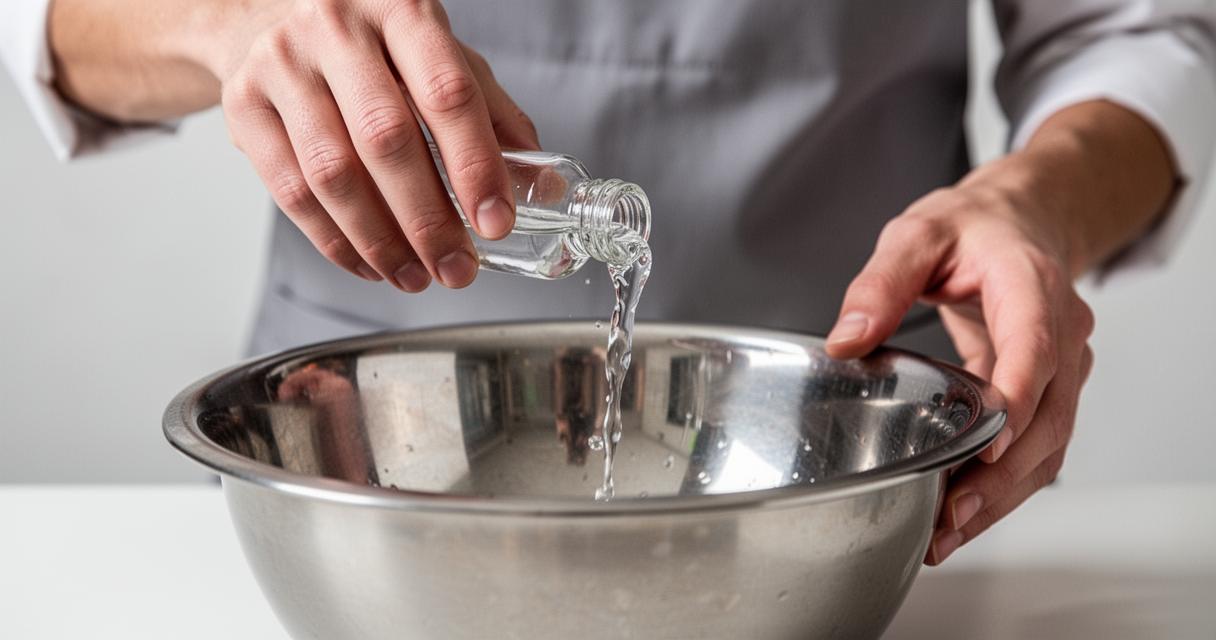
Having the right equipment on hand transforms measurement from a chore into a swift and reliable step. Most modern kitchens are equipped with at least a basic set of measuring tools, but understanding their individual strengths helps you make the best choice for a given task.
Utilising a Measuring Cup for Accurate Liquid Volumes
A measuring cup is one of the most frequently used tools for measuring liquid ingredients, though it is worth noting that cup standards vary considerably depending on where you are in the world. A US customary cup holds approximately 236.59 ml, a US legal cup holds 240 ml, a metric cup holds 250 ml, and an Imperial cup (still used in some British recipes) holds approximately 284.13 ml. These differences are not trivial, particularly in baking, where the wrong cup standard can subtly but meaningfully alter a finished dish. When in doubt, working directly in millilitres or centilitres and converting back to cups using the appropriate regional standard is the most reliable approach. For converting millilitres to US cups, the formula is: cups equal millilitres divided by 237.
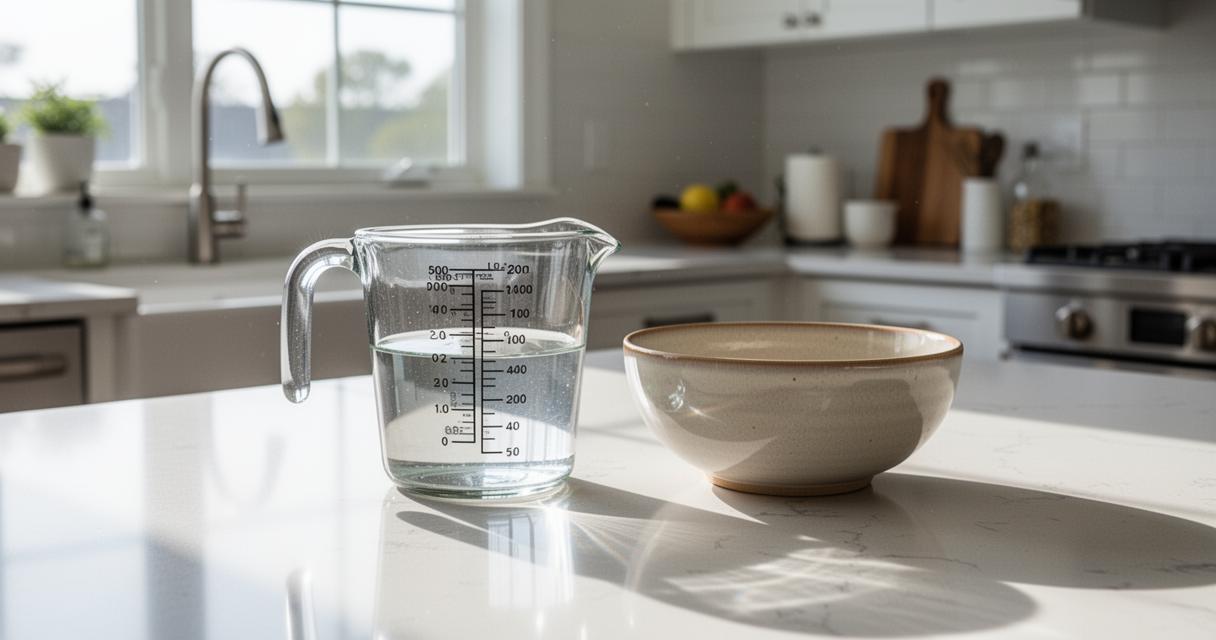
To measure accurately with a transparent measuring cup, always place it on a flat surface and read the measurement at eye level. Estimating from above introduces parallax error and can lead to consistent under- or over-measurement over successive steps of a recipe.
Translating Millilitres into Common Tablespoons and Teaspoons
In everyday culinary work, spoon-based measurements remain widely used alongside metric units. A tablespoon, sometimes called a soup spoon in European contexts, and a teaspoon each hold a fixed volume of liquid, making them convenient for smaller quantities. Whilst spoon sizes can vary slightly between countries, they provide a workable reference point when precision instruments are not immediately to hand. Knowing that 30 ml sits comfortably within a range of two tablespoons gives cooks a quick mental anchor when measuring water, oil, vinegar, or other common liquids.
Applying quick conversions to daily recipes
The most effective way to internalise kitchen unit conversion is to apply it regularly in real cooking situations. Rather than relying on a calculator each time, building a mental map of common conversions makes the process fluid and intuitive.
Measuring water, coffee, and other common liquids
Water and coffee are among the most frequently measured liquids in the home kitchen. A standard espresso shot, for instance, typically falls in the range of 25 to 30 ml (or 2.5 to 3 cl) a measurement that matters when calibrating the strength of a coffee-based dessert or a tiramisu. Measuring water for pastry dough, stocks, or syrups equally demands attention to volume: too much or too little water fundamentally changes the outcome. Understanding liquid volume in both millilitres and centilitres allows you to switch effortlessly between recipe sources, whether they originate in the UK, continental Europe, or further afield.
It is also worth remembering that millilitres measure volume, not weight. A common measurement mistake in home cooking is confusing millilitres with grams, the two are interchangeable only for water under standard conditions. For liquids with a different density, such as oils, syrups, or cream, the mass in grams will differ from the volume in millilitres, so the appropriate unit must always be applied.
Mastering kitchen units for effortless cooking success
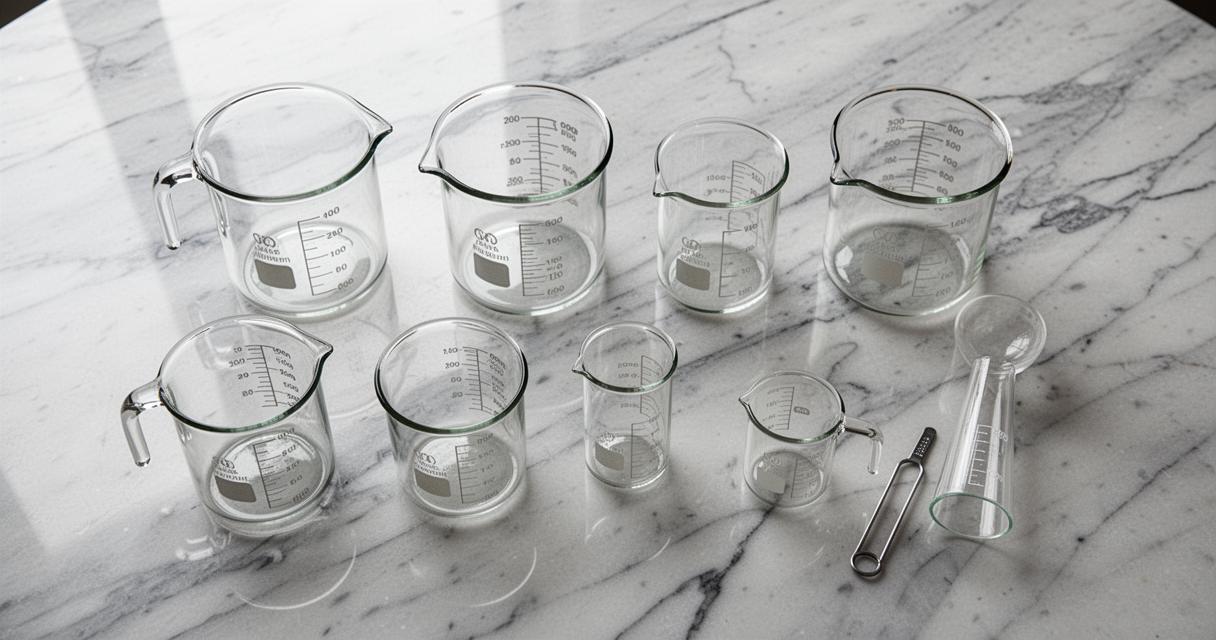
Building fluency with culinary measurements across both the metric and imperial systems opens up a much wider range of recipes and techniques. The imperial system, still referenced in some British and American sources, uses units such as fluid ounces, pints, and gallons, whilst the metric system works in millilitres, centilitres, and litres. Knowing how to navigate between these systems (and keeping a reliable conversion reference at hand) means that no recipe is ever out of reach.
A few practical habits can make accurate measuring techniques second nature in the kitchen:
- Always use a transparent measuring cup and read at eye level to avoid parallax errors.
- Keep a simple reference for key conversions: 1 cl equals 10 ml, 1 litre equals 1,000 ml, and 30 ml equals 3 cl.
- Avoid mixing metric and US measurements within the same recipe without first standardising all units.
- When a recipe specifies cups, identify which cup standard is intended before measuring.
With a clear grasp of volume units and a little practice, the arithmetic quickly becomes effortless, and the focus can return to where it belongs, creating food that is well-balanced, consistent, and genuinely enjoyable.